Over the years, we’ve been asked, “What’s the difference between HOA management and property management?” countless times. Although these terms often seem to be the same, they cater to distinct needs.
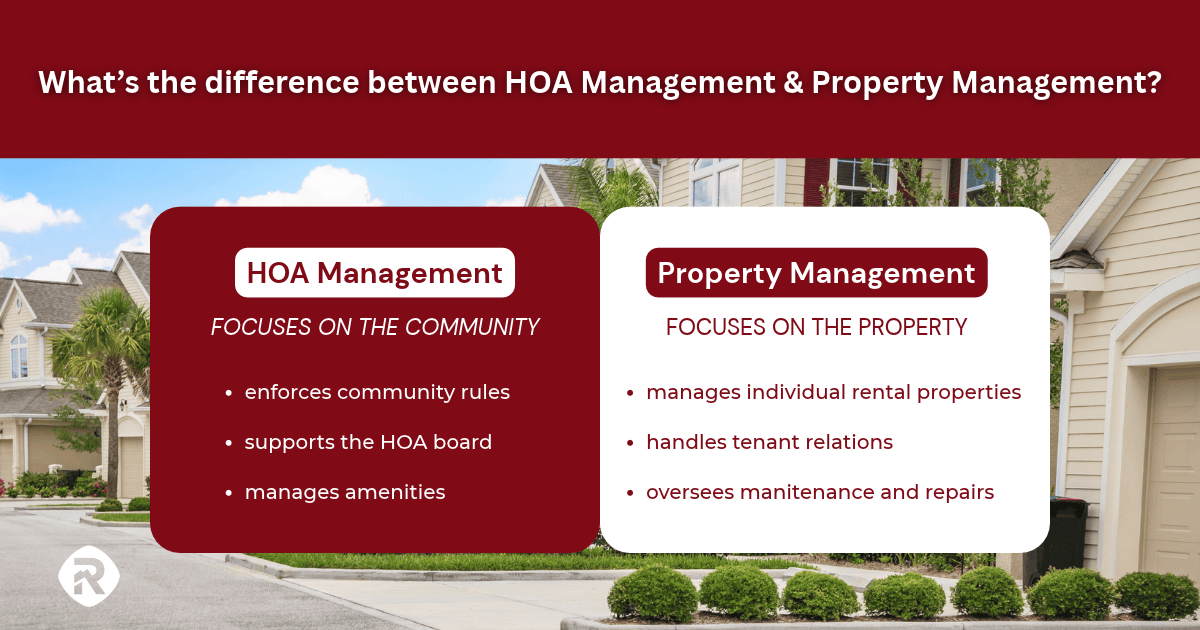
HOA management focuses on operating and supporting an entire community association, while property management typically focuses on managing individual rental properties on behalf of property owners.
Although the terms are sometimes used interchangeably, the services, responsibilities, and expertise involved can be very different. Understanding the difference can help your board choose the right type of management support for your community.
HOA management companies, like us here at Red Rock Management, specialize exclusively in managing homeowners associations, condominium associations, and townhome communities.
This focus means we understand the complexities unique to associations, from navigating governing documents, covenants, and bylaws to addressing violations and community harmony.
Our expertise revolves around serving boards and homeowners directly, handling tasks such as:
By partnering with an HOA-specific management firm like Red Rock, your board benefits from tailored solutions designed to maintain your community’s value and appeal, protect your financial health, and enhance the quality of life for residents.
Traditional property management companies typically manage rental properties and individual real estate, emphasizing landlord-tenant relationships rather than community governance. Their responsibilities focus on:
While these services are essential for rental properties, they often lack the specialized understanding required for effectively managing the unique challenges that homeowners associations encounter daily.
The biggest difference is who and what the management company is responsible for.
HOA management supports the operation of an entire community association. This can include working with the board, managing association finances, coordinating common-area maintenance, enforcing community rules, overseeing architectural requests, and communicating with homeowners.
Property management, on the other hand, generally focuses on individual properties and the relationship between property owners and tenants. This can include leasing, rent collection, tenant communication, maintenance, and property inspections.
In simple terms, property management is generally focused on managing individual rental properties, while HOA management is focused on managing the needs and operations of an entire community association.
Your community association is more than just a property. It’s a collective group of properties with specific needs, goals, and expectations. Specialized HOA management ensures your community receives attention from professionals deeply familiar with association-specific challenges and opportunities.
Partnering with an HOA management company means leveraging proven expertise to navigate governance intricacies, enforce community standards effectively, and manage communal resources strategically. While many property management companies offer community association management, we instead recommend partnering with a group that has the expertise and focus that your community needs.
In short, property management is generally best suited for managing individual rental properties, while HOA management is designed to help boards effectively operate and manage their communities.
The right management partner depends on what needs to be managed. If you’re managing individual rental properties and working primarily with tenants and property owners, traditional property management may be the right fit. If you’re a board responsible for the operations, finances, rules, maintenance, and overall needs of an entire community, specialized HOA management can provide the expertise your association needs.
If you have questions about HOA management or are considering professional management for your community, Red Rock HOA Management is here to help! Reach out to our team to learn more about how we can support your board and community.
HOA management focuses on managing the operations and needs of a homeowners association or other community association. This may include board support, financial management, rule enforcement, maintenance coordination, architectural reviews, and homeowner communication. Property management typically focuses on individual rental properties and responsibilities such as leasing, rent collection, tenant communication, and property maintenance.
Some property management companies offer HOA or community association management services, but not all have the same level of experience with association-specific responsibilities. HOA management requires an understanding of governing documents, board operations, community rules, association finances, and the needs of homeowners. Boards should look for a management company with specific experience managing community associations.
An HOA management company helps a community association handle the day-to-day responsibilities of operating the community. Depending on the association’s needs, services may include financial management, board meeting support, maintenance coordination, rule enforcement, architectural reviews, inspections, vendor management, and communication with homeowners.