
Managing an HOA’s finances is one of the board’s most important responsibilities, but that does not mean board members need to be accountants. With the right HOA financial reporting process, monthly financial statements can give your board a clear picture of the community’s financial health and help you make informed decisions.
The goal is not to analyze every transaction. It is to understand where the association stands, identify potential issues early, and make sure spending, collections, and savings are aligned with the community’s budget and long-term needs.
A monthly financial reporting package should give the board a consistent view of the association’s income, expenses, cash, unpaid assessments, outstanding bills, and reserve funds.
At a minimum, your monthly HOA financial reports should include:
Looking at these reports together gives the board a much more complete picture than reviewing individual transactions.
Monthly financial reports are best viewed as a dashboard, not an accounting exam. Board members do not need to understand every accounting term to ask good questions.
Start by looking for changes and trends.
For example, if operating expenses are consistently higher than budgeted, ask why. A single increase may be related to seasonal maintenance, an annual insurance payment, or an unexpected repair. If the same expense is over budget month after month, however, it may need to be addressed during the next budgeting cycle.
The same applies to homeowner assessments. A few late payments may be expected, but a growing number of delinquent accounts or balances that remain unpaid for several months can affect the association’s cash flow.
The key is to focus on what the numbers may mean for the community and whether the board needs to take action.
A budget variance is simply the difference between what the HOA budgeted and what actually happened. Not every variance is a problem.
When reviewing a significant variance, ask:
This keeps monthly financial discussions focused on the issues that actually affect the community.
Consistent monthly reporting can help boards identify potential problems before they become larger financial concerns.
Keep an eye out for:
A red flag does not automatically mean something is wrong. It simply means the board should ask questions and understand what is happening.
Monthly financial reporting should not only tell your board what happened last month. It should also help inform future decisions.
If insurance costs, utilities, landscaping, or repairs are consistently higher than expected, those trends should be considered when preparing the next HOA budget. The same is true for reserve planning. Boards should regularly review reserve contributions and spending alongside the association’s reserve study and upcoming capital projects.
This ongoing review helps the board plan ahead instead of reacting to financial issues after they arise.
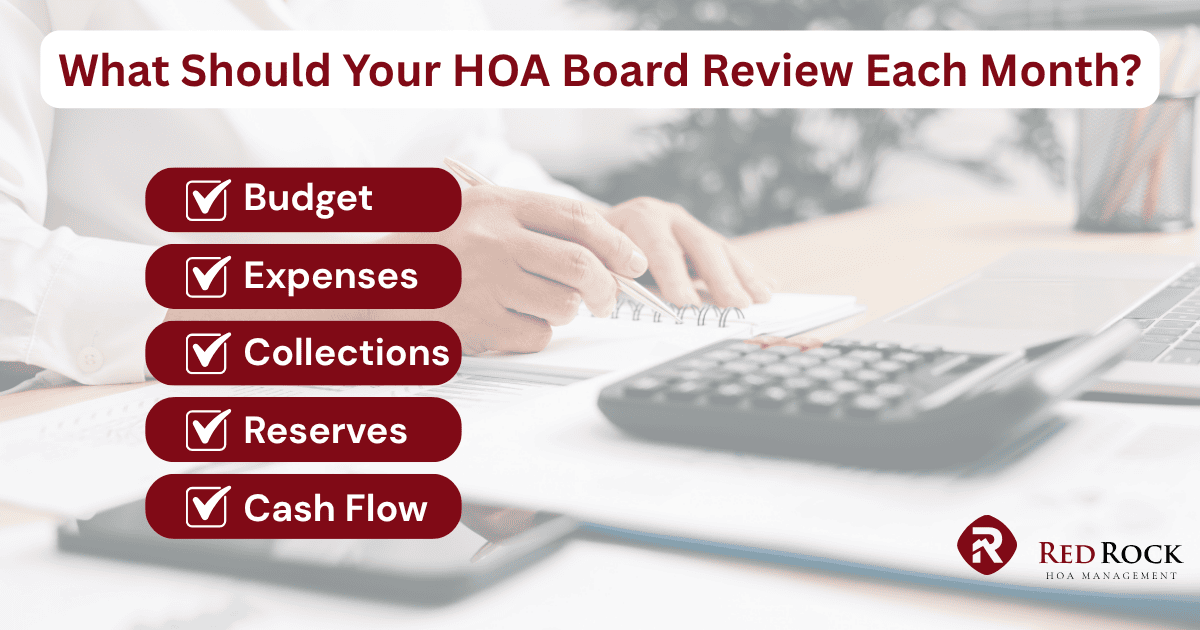
Strong HOA financial management is about more than having reports available. Boards need a consistent process for reviewing them.
Ideally, monthly reports should be prepared after the books are closed and bank activity has been reconciled. Board members should receive the financial package far enough in advance to review it and submit questions before the meeting.
During the meeting, the board can focus on significant variances, outstanding issues, and decisions that require attention rather than spending time reviewing every routine transaction.
An experienced HOA management company can also help organize monthly financial reporting, monitor budgets and collections, manage payments, and give the board the information it needs to make informed financial decisions.
Your HOA’s finances should not feel like a mystery. The right reporting process and professional support can give your board the information it needs to oversee the community with confidence.
Red Rock provides personalized HOA management solutions designed around the needs of your community. Request a personalized management proposal to learn how Red Rock can support your board with financial management and more.
Most boards should review a balance sheet, income statement, budget variance report, accounts receivable aging, accounts payable aging, bank reconciliation, cash flow statement, and reserve fund report each month. The exact reports may vary based on the association’s needs and management structure.
Monthly HOA financial reporting helps boards monitor cash flow, expenses, collections, reserves, and budget performance. Reviewing financial information consistently can also help identify potential issues early and support better budgeting and long-term financial planning.
Yes. Many HOA management companies provide financial management services, including preparing monthly financial statements, reconciling accounts, tracking assessments and expenses, managing vendor payments, and helping boards understand their financial position.